




Climate Change Adaptation in the Alps – Examples, Strategies and Perspectives
Panel discussion at the Journalism Festival 2026 – 10 May 2026, Innsbruck
The impacts of climate change are clearly visible throughout the Alps. For more than 25 years, the Alpine Convention has provided a binding framework agreement between all Alpine countries, aiming to promote sustainable development across the Alpine region.
How these initiatives are implemented in practice, how a national park addresses climate change adaptation, and which projects are being developed at European level in this field were the main topics discussed during a panel discussion held as part of the Journalism Festival in Innsbruck.
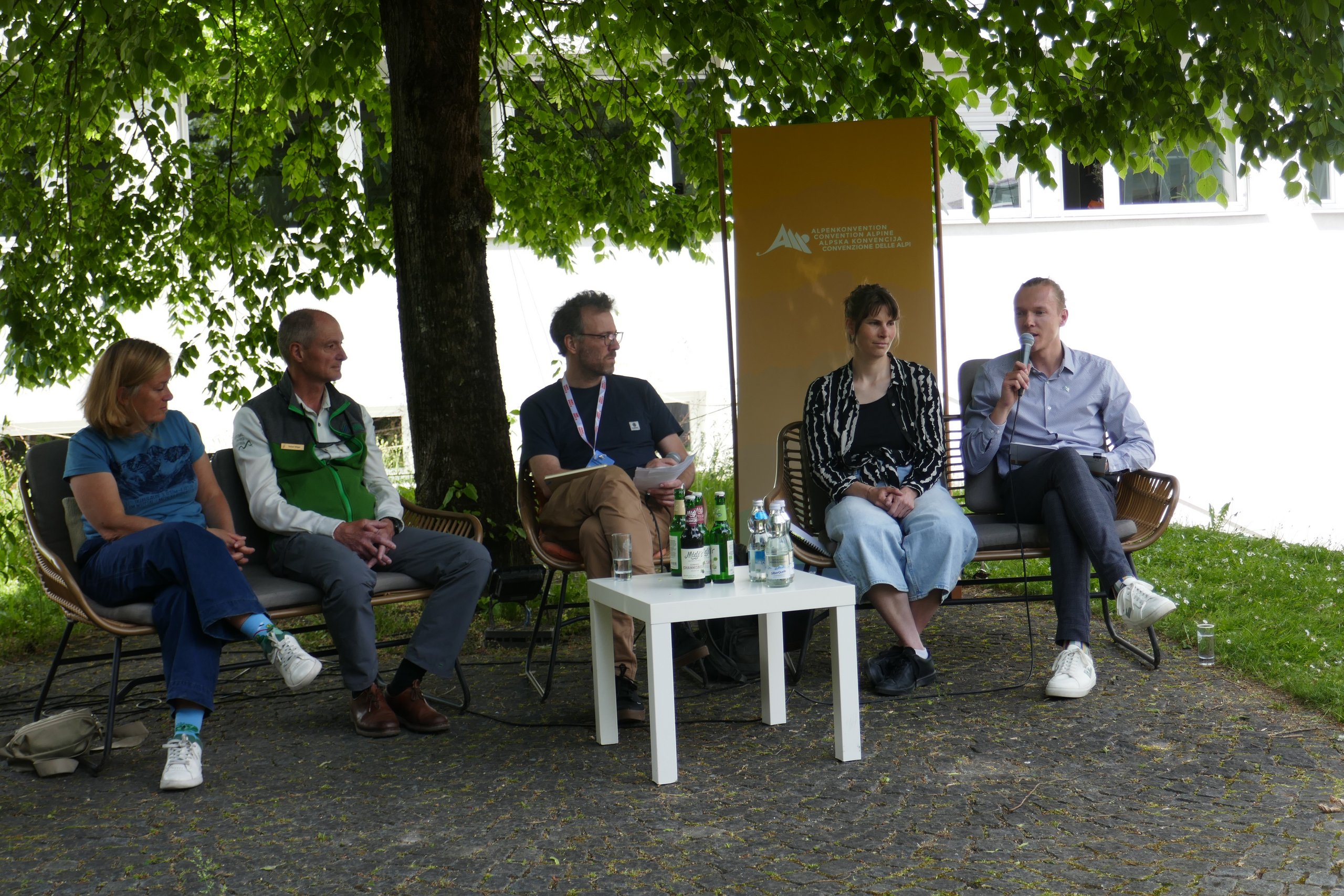
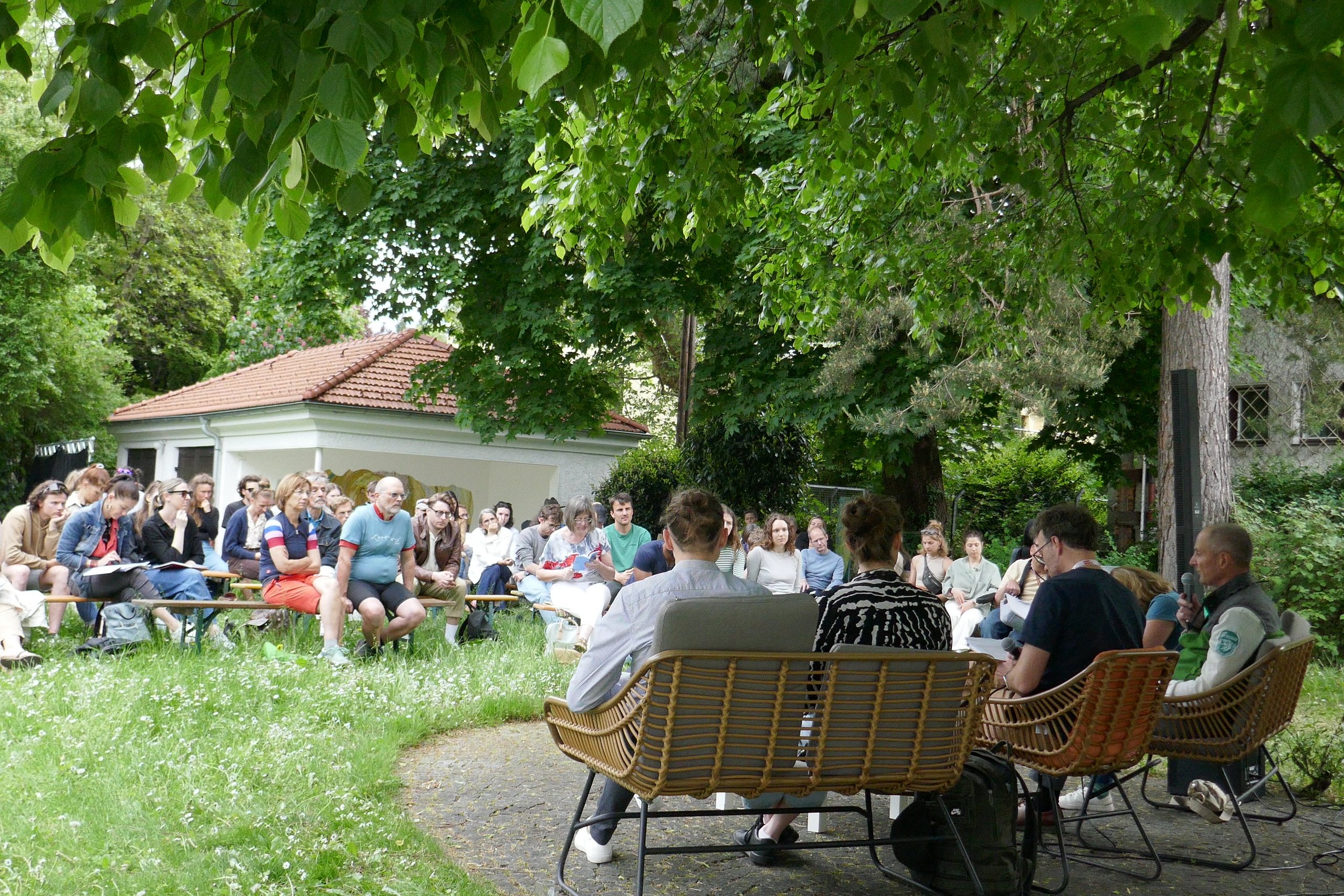
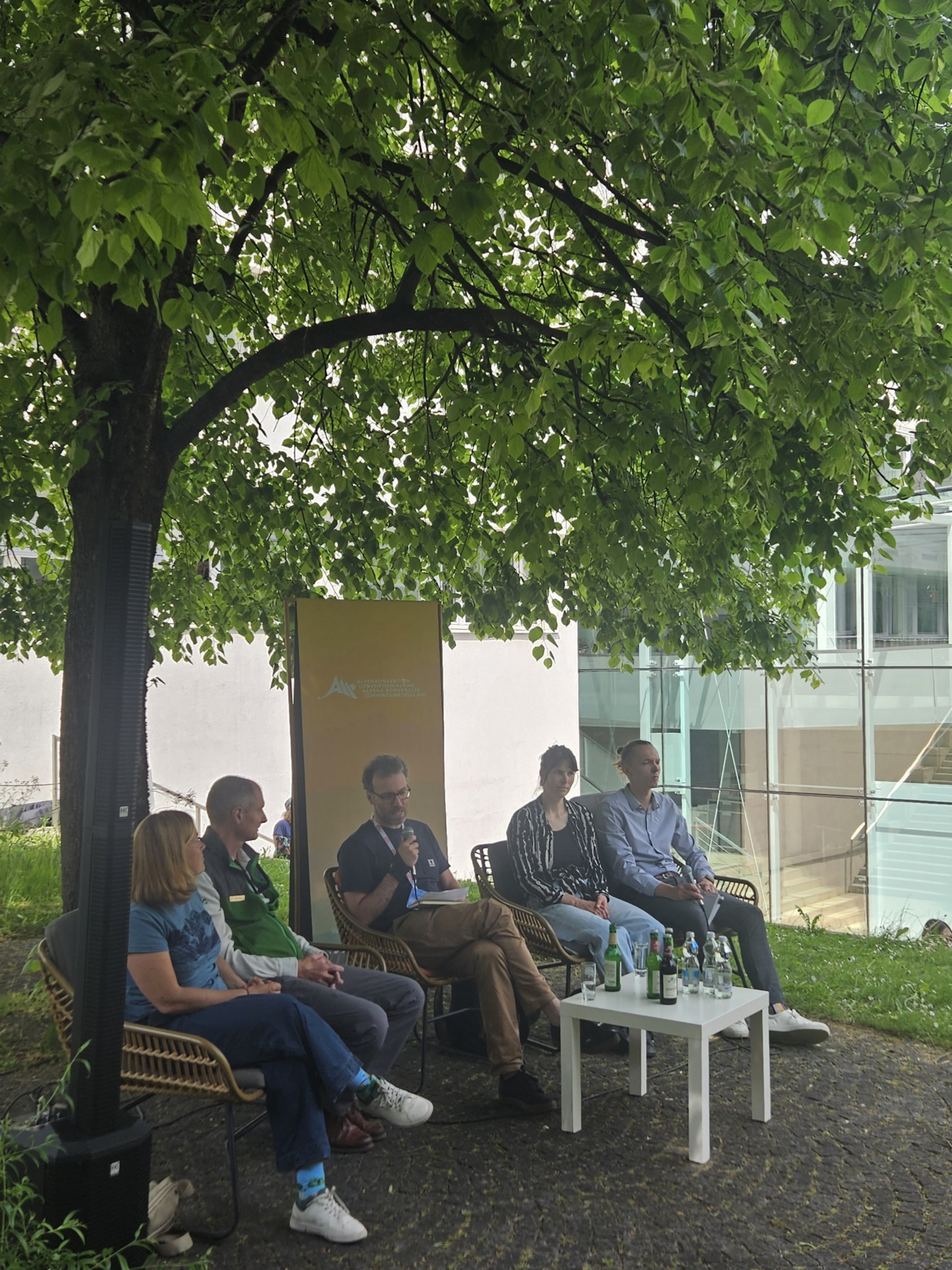
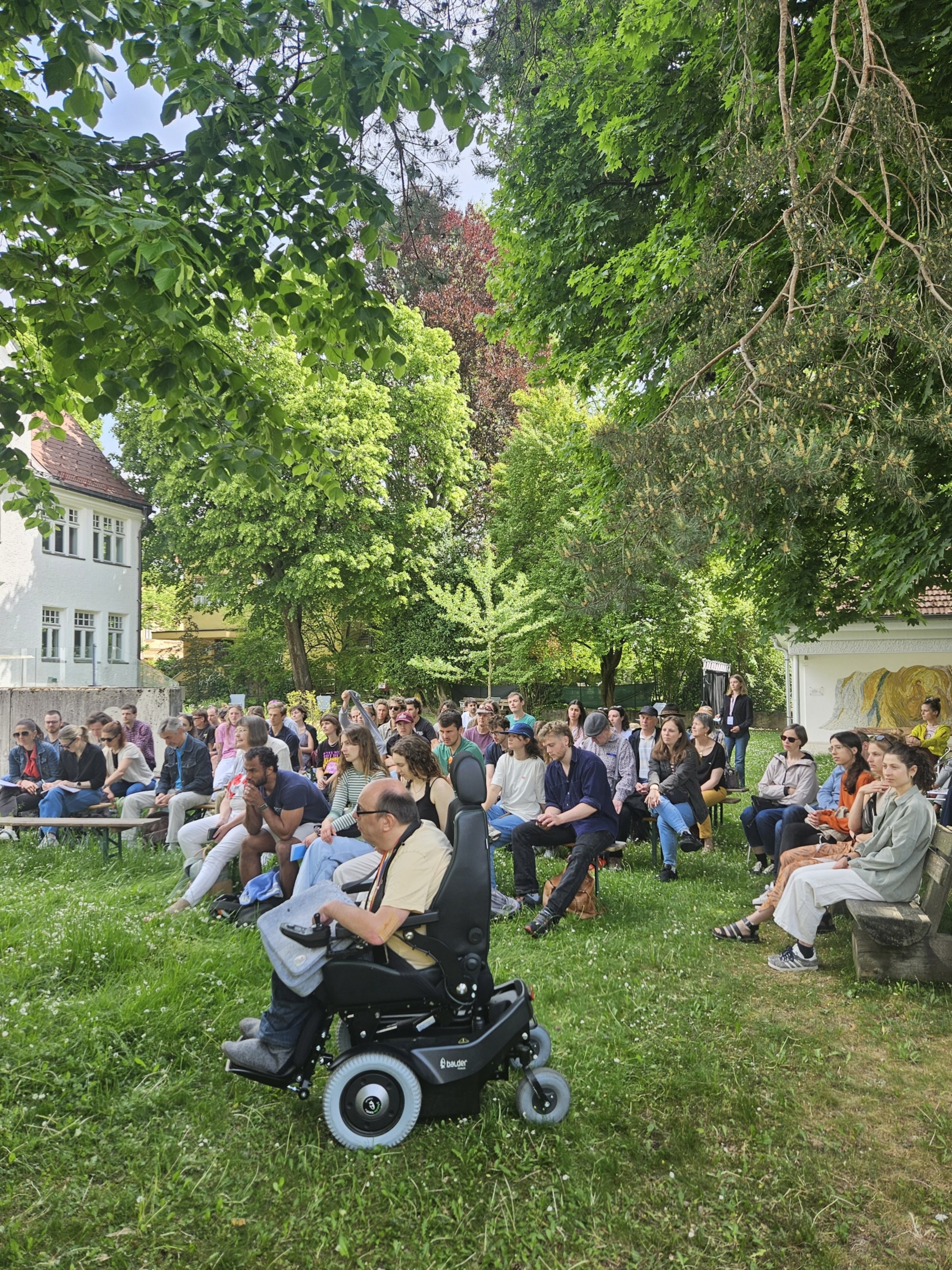
In the courtyard of the Haus der Begegnung in Innsbruck, surrounded by an early summer atmosphere, around 70 interested participants followed the discussion between four speakers, accompanied by moderator Simon Welebil. Sarah Twardella from Alpine Pearls also took part and presented the BeyondSnow project.
Rising temperatures, extreme weather events and natural hazards in mountain regions
Felix Gertheinrich from the Permanent Secretariat of the Alpine Convention opened the discussion by outlining the current situation in the Alps and presenting the key Alpine strategy regarding climate change. The goal is to make the Alps climate-neutral and resilient to climate impacts by 2050. This is being pursued through initiatives, coordination bodies, analyses, supporting guidelines and political efforts.
The key initiatives include:
1. Innsbruck Declaration (2019)
A political commitment towards “climate-neutral and climate-resilient Alps by 2050”, forming the basis for further climate policies within the Alpine Convention.
2. Alpine Climate Target System 2050
Defines concrete objectives for sectors such as transport, energy, tourism, water management, agriculture and forests, serving as a long-term strategy for the entire Alpine region.
3. Climate Action Plan 2.0
Contains concrete implementation measures for the coming years. Priority areas include transport, energy, tourism, natural hazards, water resources, spatial planning, soils, mountain agriculture, mountain forests and biodiversity. The objective is to strengthen cross-border cooperation among all Alpine countries.
4. Alpine Climate Board
Since 2016, the Alpine Climate Board has been the central climate body of the Alpine Convention. It coordinates the implementation of climate objectives and develops new measures. Current priorities for 2025–2026 include nature-based solutions, forest protection and climate adaptation.
Current data clearly show that the impacts of climate change are already particularly evident in the Alps and that rapid action remains necessary.
The BeyondSnow project
Sarah Twardella from Alpine Pearls presented the EGTC (European Grouping of Territorial Cooperation) and provided insights into the BeyondSnow project. The transnational project was co-financed through the Interreg Alpine Space Programme and implemented between 2022 and 2025. Its focus was one of the greatest challenges currently facing Alpine tourism regions: the decline in snow reliability due to climate change.
The project focused on small and medium-sized winter sports destinations located at medium altitudes, whose economic development is strongly dependent on snow conditions. The aim was to increase the climate resilience of these regions and identify pathways to ensure that they remain attractive places to live and visit in the long term.
To achieve this, adaptation strategies were developed together with local stakeholders, pilot measures were tested and a digital decision-support tool for regional planning was created.
The main project components, results and activities included:
- Analyses of the impacts of climate change and decreasing snow reliability on tourism regions, complemented by surveys, assessments and stakeholder consultations.
- Development of the so-called Resilience Adaptation Model and a digital decision-support tool to evaluate adaptation options for municipalities and destinations.
- Participatory processes involving local communities, tourism businesses and political representatives to develop strategies, project ideas and pilot measures.
- Testing of concrete adaptation measures in pilot regions.
- Development of guidelines and recommendations for other Alpine regions and institutions.
Alpine Pearls was one of the 13 project partners from six Alpine countries involved in the project. The Alpine Pearls member municipality Werfenweng participated as a pilot region, while Bohinj was also involved through another project partner.
In addition to numerous observer organisations – including the Permanent Secretariat of the Alpine Convention and the Austrian Alpine Club – the project cooperated with ten municipalities, the so-called Pilot Working Areas:
- Piani d’Erna
- Monesi di Triora
- Ala di Stura & Balme
- Pradibosco
- Werfenweng
- Bohinj
- Großer Arber
- Métabief
- Sattel-Hochstuckli
- Balderschwang
In these regions, vulnerability assessments were carried out to determine how strongly each area is affected by declining snow reliability. In addition, Co-Design Labs, workshops, public events and presentations were organised, bringing together municipalities, tourism businesses and citizens to jointly develop future visions and adaptation measures. These activities also helped to make the project topics accessible and understandable for a broader audience.
For each of the ten pilot regions, a transition strategy was developed, describing concrete adaptation pathways – from defining future visions and identifying fields of action to developing specific project ideas. Selected measures were already tested in practice in order to assess their feasibility and potential for implementation.
A key element of the project was the involvement of local stakeholders. Adaptation strategies should not be developed “from the outside”, but rather created together with the regions concerned. This participatory approach also brought challenges. In several pilot regions, initial scepticism and difficulties in finding enough participants were encountered at the beginning of the project. However, over time, awareness-raising activities and strong commitment to participation led to very successful cooperation. Numerous proposals were developed and new partnerships emerged.
In the case of Werfenweng, Alpine Pearls’ pilot region, eight fields of action were identified. During the first pilot phase, the focus was placed on the topic of water experiences. Two new guided hiking trails were created, which expand the year-round tourism offer while also raising awareness and encouraging participatory reflection on water as a resource, climate change impacts and water as an element of experience.
Further information:
https://www.werfenweng.eu/beyondsnow/
BeyondSnow does not follow an approach based solely on technical solutions such as artificial snowmaking. Instead, climate change is seen as an opportunity to fundamentally strengthen the resilience and diversity of Alpine destinations.
The most widespread adaptation strategies identified include:
- Development of year-round tourism
- Diversification of leisure and tourism offers
- Sustainable development and mobility
- Strengthening regional economic cycles
- Participatory planning involving local stakeholders
BeyondSnow therefore understands itself not only as a tourism project, but as a transformation project for Alpine regions that need to prepare for a future with less snow while strengthening their economic, social and environmental resilience.
Further information:
https://www.alpine-space.eu/project/beyondsnow/
The approach of National Parks: Minimising intervention in nature and raising awareness among visitors
Herbert Wölger, Managing Director of the Gesäuse National Park, presented the park’s approach to climate change and adaptation measures.
Unlike the BeyondSnow project, which primarily focuses on the adaptation of tourism regions and local economic systems, the Gesäuse National Park concentrates mainly on the adaptation and resilience of natural ecosystems. However, both approaches share a common goal: making Alpine regions more resilient to the impacts of climate change in the long term.
The adaptation strategy of the National Park can be summarised in four key areas:
1. Climate-resilient forest development
One major focus is adapting forests to future climatic conditions. Research results show that today’s predominantly spruce-dominated forests are increasingly under pressure due to rising temperatures and changing precipitation patterns.
The National Park therefore promotes the development of more diverse and resilient mixed forests, including tree species such as beech, fir and, in some areas, oak. Natural forest dynamics are combined with targeted management measures to support long-term adaptation.
2. Research and long-term monitoring
The National Park conducts extensive research on climate, hydrology, soils, biodiversity and habitats. Through long-term monitoring, changes can be detected at an early stage and the scientific basis for adaptation measures can be established.
Monitoring serves both to better understand climate impacts and to develop suitable conservation strategies.
3. Preserving and promoting resilient ecosystems
The guiding principle is that near-natural and species-rich ecosystems are better able to respond to climate change. Therefore, the protection of natural dynamics in forests, rivers and Alpine habitats is given priority.
The largely unrestricted course of the River Enns, together with extensive wilderness areas, enables species and habitats to adapt to changing environmental conditions.
4. Visitor management and sustainable use
With increasing pressure from tourism, the National Park focuses on visitor management and offers environmental education programmes to increase knowledge and awareness while protecting sensitive species and habitats.
Management plans consider both nature conservation requirements and future challenges arising from climate change.
The “Mountaineering Villages” initiative of the Austrian Alpine Club
Liliana Dagostin, Head of the Spatial Planning and Nature Conservation Department at the Austrian Alpine Club, presented the Mountaineering Villages (Bergsteigerdörfer) initiative.
In the context of climate change adaptation and sustainable regional development, the Mountaineering Villages represent an interesting alternative model to classic Alpine destinations that are strongly shaped by tourism. The initiative was launched in 2008 and is recognised as an official implementation project of the Alpine Convention.
Its aim is to support municipalities that are committed to nature-friendly, quality-oriented Alpine tourism.
Unlike large tourism destinations, whose development is often based on high visitor numbers, extensive infrastructure and a strong economic dependence on tourism, Mountaineering Villages follow a much smaller-scale approach.
The focus is on Alpine landscapes, regional culture and nature-based activities such as hiking, mountaineering and ski touring. Growth at any cost is not the objective. Instead, tourism should develop at a scale that protects natural resources and maintains the quality of life of local residents.
Against the background of climate change, this model is often considered an example of a more resilient form of tourism development. Since Mountaineering Villages do not primarily depend on snow-reliant infrastructure such as large ski areas, they are less vulnerable to declining snow reliability.
At the same time, they promote forms of year-round tourism based on landscape experiences, nature observation and regional value creation.
However, the initiative also demonstrates that sustainable tourism cannot be implemented in the same way everywhere. Not every destination can or wants to become a Mountaineering Village. Admission to the network is based on clearly defined criteria.
The most important requirements include:
- a distinctive Alpine landscape with high natural and scenic value;
- a strong connection to mountaineering and Alpine culture;
- the absence of large-scale tourism infrastructure;
- a commitment to sustainable regional development;
- a manageable tourism infrastructure;
- the municipality’s willingness to actively support the objectives of the Alpine Convention.
Similar principles are also followed by the Alpine Pearls network, which focuses particularly on sustainable mobility and climate-friendly travel. Here too, only municipalities meeting specific quality and sustainability standards can participate.
This demonstrates that such models provide important guidance for the transformation of Alpine regions, but they cannot be considered a universal solution for all tourism destinations.
Cooperation and partnerships
All speakers agreed on one key point: cooperation and partnerships play a central role in climate change adaptation, as the challenges posed by climate change usually affect several sectors and extend beyond the boundaries of individual municipalities.
Adaptation measures often simultaneously concern tourism, nature conservation, agriculture and forestry, infrastructure, as well as the local population. Individual actors can therefore only address these complex challenges to a limited extent on their own.
Through cooperation between municipalities, businesses, research institutions, interest groups and civil society organisations, knowledge, resources and experiences can be pooled. Partnerships facilitate the exchange of good practices, promote joint learning processes and increase acceptance of adaptation measures among the population. At the same time, they enable better coordination of actions across administrative and sectoral boundaries.
Especially in Alpine regions, initiatives such as BeyondSnow, the Mountaineering Villages and Alpine Pearls demonstrate that long-term adaptation strategies are particularly successful when they are based on broad participation and involvement of local and regional stakeholders.
Cooperation therefore strengthens not only the effectiveness of individual measures, but also the resilience of entire regions in dealing with the consequences of climate change.
What will Alpine tourism look like in the future?
At the end of the discussion, the moderator asked the speakers to summarise the future of Alpine tourism in one sentence. This proved to be a challenging task. The wishes expressed included greater sustainability, more humility and respect towards nature, and taking climate change seriously in the interest of future generations. The basic idea of the Alpine Convention provides a concise summary:
Sustainable tourism in the spirit of the Alpine Convention is environmentally responsible tourism that takes into account the needs of visitors and local communities, respects the ecological limits of the Alpine region and contributes to its long-term sustainable development.
Conclusion
Many thanks to the organisers of the Journalism Festival and the Haus der Begegnung for the invitation.
It was an inspiring, interesting and enjoyable discussion that could easily have continued much longer. After one and a half hours, the conversation had only just begun to unfold its full potential.
Special thanks go to moderator Simon Welebil for guiding the discussion and to all participants for their valuable contributions.
Further information:
https://www.journalismusfest.org/klimawandel-alpen/